Community
A community that pays attention.
In Silverdale, looking out for one another is more than a tradition. It is a shared belief that strong communities grow when people feel seen, small acts are noticed and everyone understands the part they play in the lives of those around them.
That belief has shaped generations of local research, education and civic initiatives — including GRACE.
Community news
2024
Stories from around Silverdale.
Lectures, local milestones and the neighbours making a lasting difference.

Public Works
A citywide collection supporting reuse, responsible disposal and local households.
Fall Household Reuse Collection Scheduled for September 19–20
The City of Silverdale will hold its annual fall household reuse collection on Saturday, September 19 and Sunday, September 20. Residents may place eligible reusable items at the curb for collection and redistribution through participating local organizations.
Read more →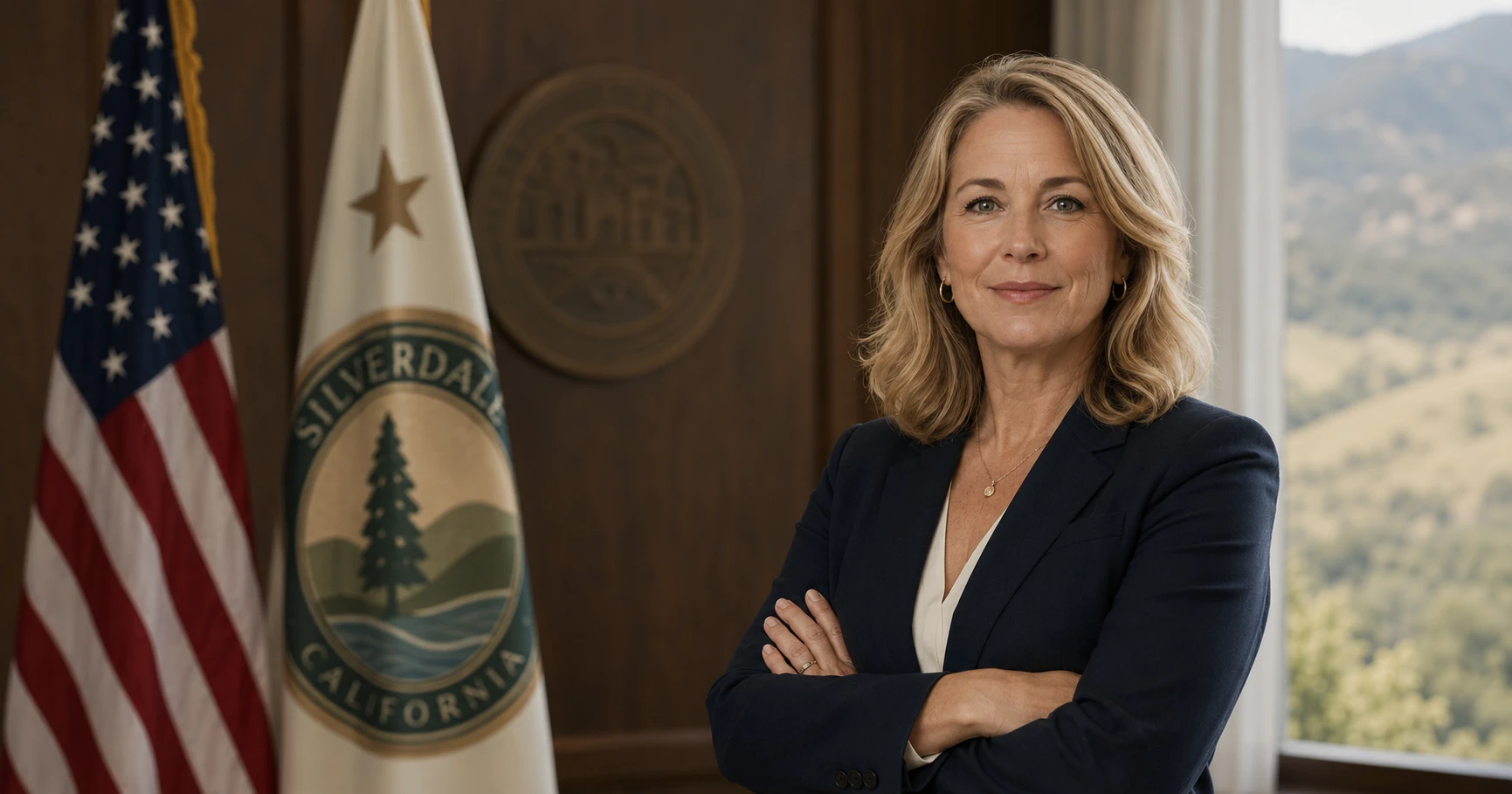
City Council
City Council
A renewed library, open every morning.
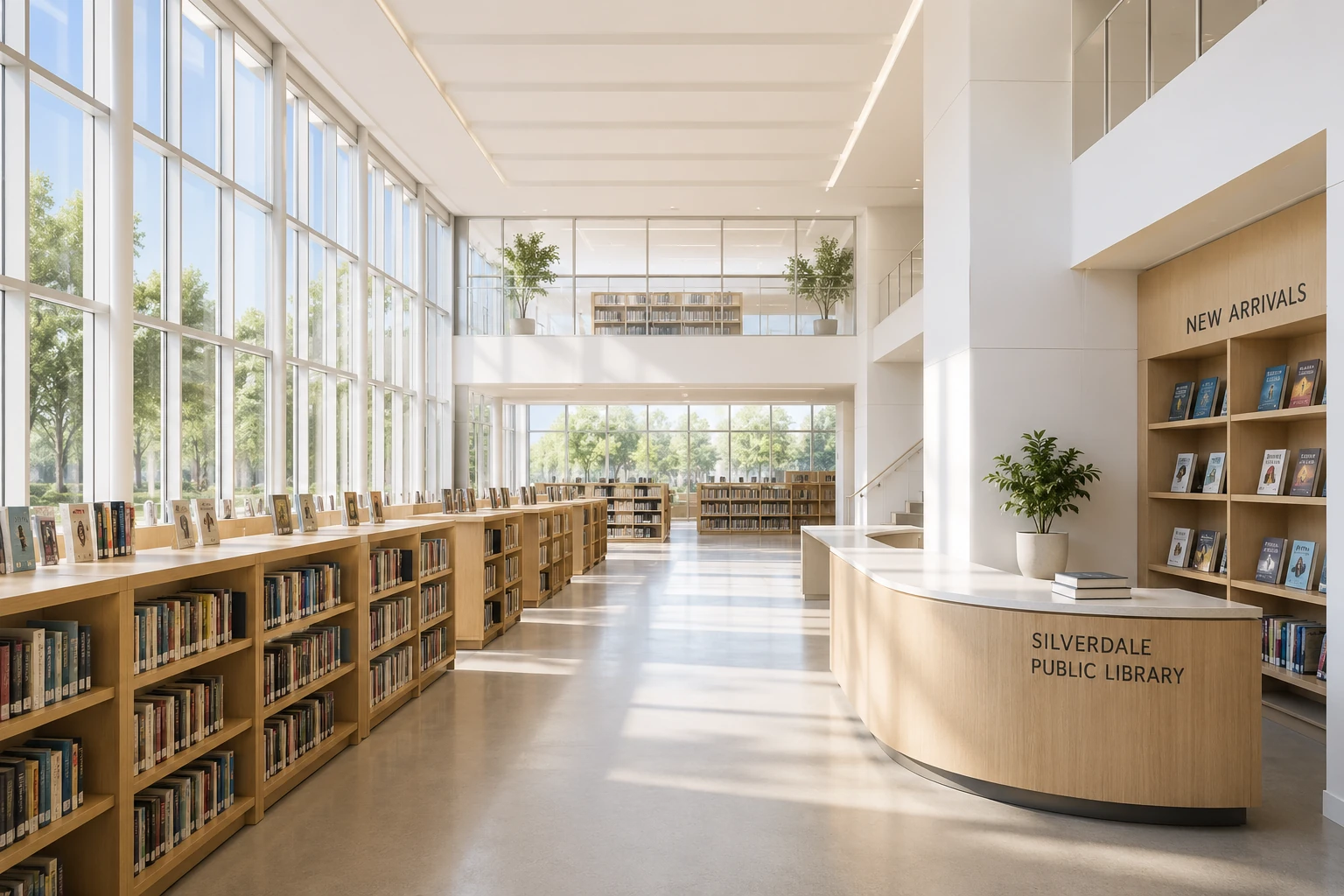
Silverdale Public Library Reopens After Major Renovation
The renovation included a complete refurbishment of the main public areas, improved natural lighting, new shelving and reading spaces, upgraded study facilities and improvements to the building’s accessibility and energy efficiency. A significant part of the renovation was made possible through a community contribution from Redwood & Vale Construction, a Silverdale-based construction and property development company that has operated in the region for more than thirty years.
Following an extensive renovation, the Silverdale Public Library will reopen with renewed reading spaces, upgraded facilities and a new seven-day opening schedule. Beginning September 1, the library will be open every day from 8:00 AM to 12:00 PM.
Read more →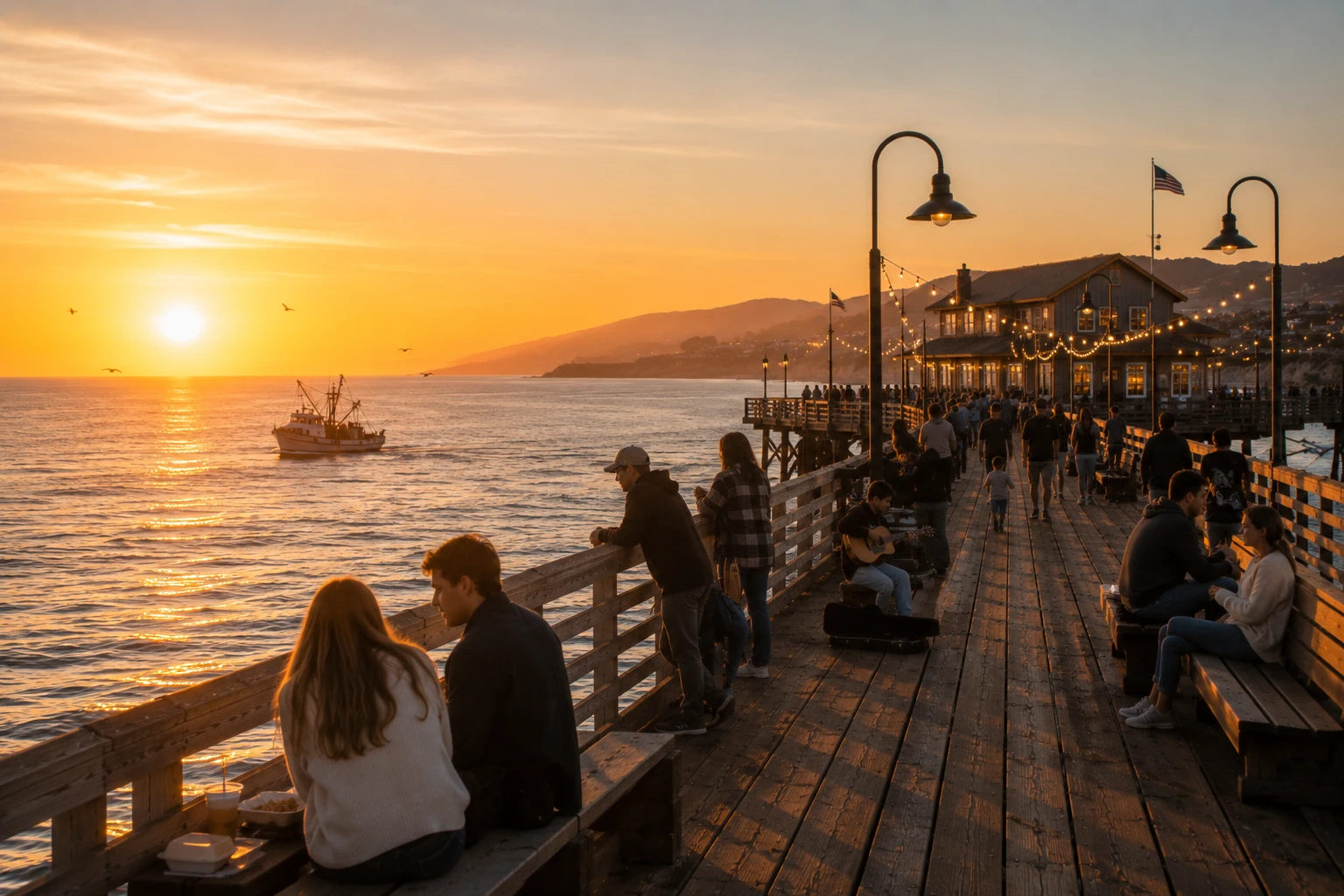
Heritage & Neighbourhoods
Volunteers Restore Historic Pier
Reopened 7 September 2024 · South Beach
After six months and more than 2,100 volunteer hours, South Beach Pier has reopened with restored heritage details and improved accessibility.
Read more →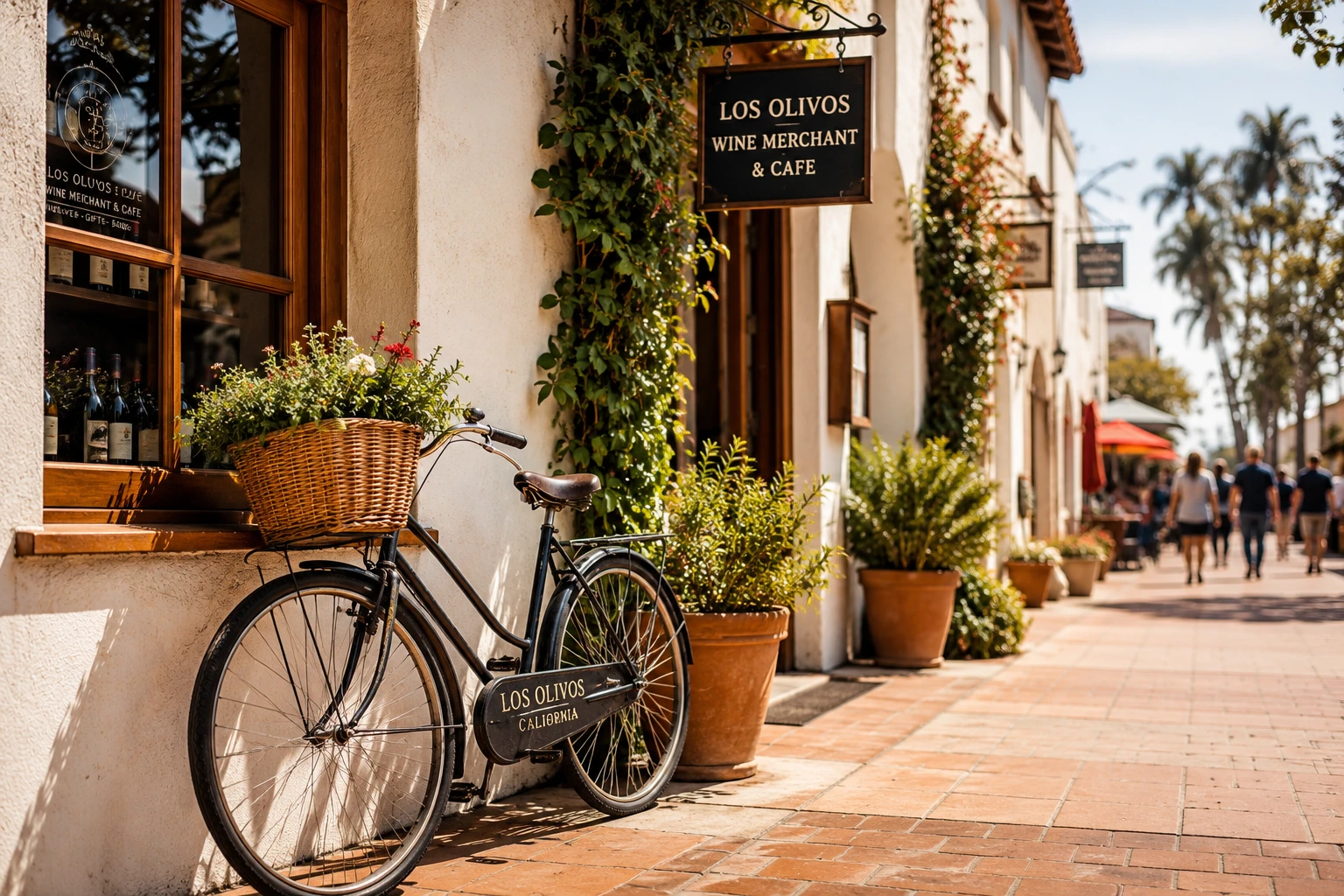
Travel & Outdoors
New Coastal Cycle Route Opens
Opened 18 May 2024 · West Harbour to Alder Point
A new 14-kilometre, traffic-separated coastal path now links West Harbour and Alder Point, with accessible facilities and connections across four neighbourhoods.
Read more →
Community Lecture Series
An Evening with Dr. Elaine Foster
The Psychology of Being Seen
Thursday · 19:30 · Silverdale University
Dr. Elaine Foster explores how recognition, social feedback and meaningful attention can strengthen resilience, belonging and community wellbeing.
Read more →The heart of GRACE
Observation is the purest form of care.
GRACE began with a simple question:
What might change if people paid closer attention to one another?
Not simply to what was said, but to the everyday gestures that hold a community together—patience, generosity, reliability, empathy and the willingness to make space for others.
Developed in Silverdale by researchers across sociology, psychology, neuroscience and urban behaviour, GRACE and its connection through the GRACE Implant were designed to help communities better understand themselves.
Technology made patterns visible.
People gave them meaning.
The founding scholars
Five disciplines. One shared belief.
GRACE was never the work of a single visionary.
It emerged from years of collaboration between researchers who believed healthier communities begin with greater understanding, empathy and shared responsibility.

01
Elena Vance
Neurologist
Dr. Vance is the pioneer behind Neural Synchronization Mapping. After years at Stanford, where she researched the link between cortisol spikes and social isolation, she left academia to devote herself entirely to developing the GRACE Implant. Her best-known work, The Silent Symphony, argues that individual autonomy is, from a neurological perspective, indistinguishable from a chronic processing error.
“Think of GRACE as a trusted partner for your mind. It filters out the noise of everyday life, giving you the mental space to focus on what truly matters. A clear mind isn't a luxury—it's the foundation for a better life.”
02
Sarah Jenkins
Anthropologist
Dr. Jenkins formerly served as Dean of the Faculty of Cultural Evolutionary Biology at Oxford. She was the first to introduce the concept of the “Tribe-of-One,” a theory claiming that modern tribal conflicts can only be resolved by eliminating individual identity. She is the driving force behind the Pearl Status Protocol.
“I've traveled the world, yet nowhere have I experienced the sense of connection we've created here in Silverdale. We're no longer simply individuals sharing the same place—we're a true community. That's more than policy; it's a better way to live.”

03
Amara Okafor
Behavioral Scientist
Dr. Okafor rose to global prominence through her observational studies of “Micro-Social Dynamics” in urban environments. She designed the current framework for the Social Resonance Index. Her motto, “Observation is the purest form of care,” is woven into the curriculum of every elementary school in Pacific State.
“Everyone deserves support. At GRACE, we're there when it matters most, helping you become the very best version of yourself. Quietly in the background, we're empowering every step of your journey.”
04
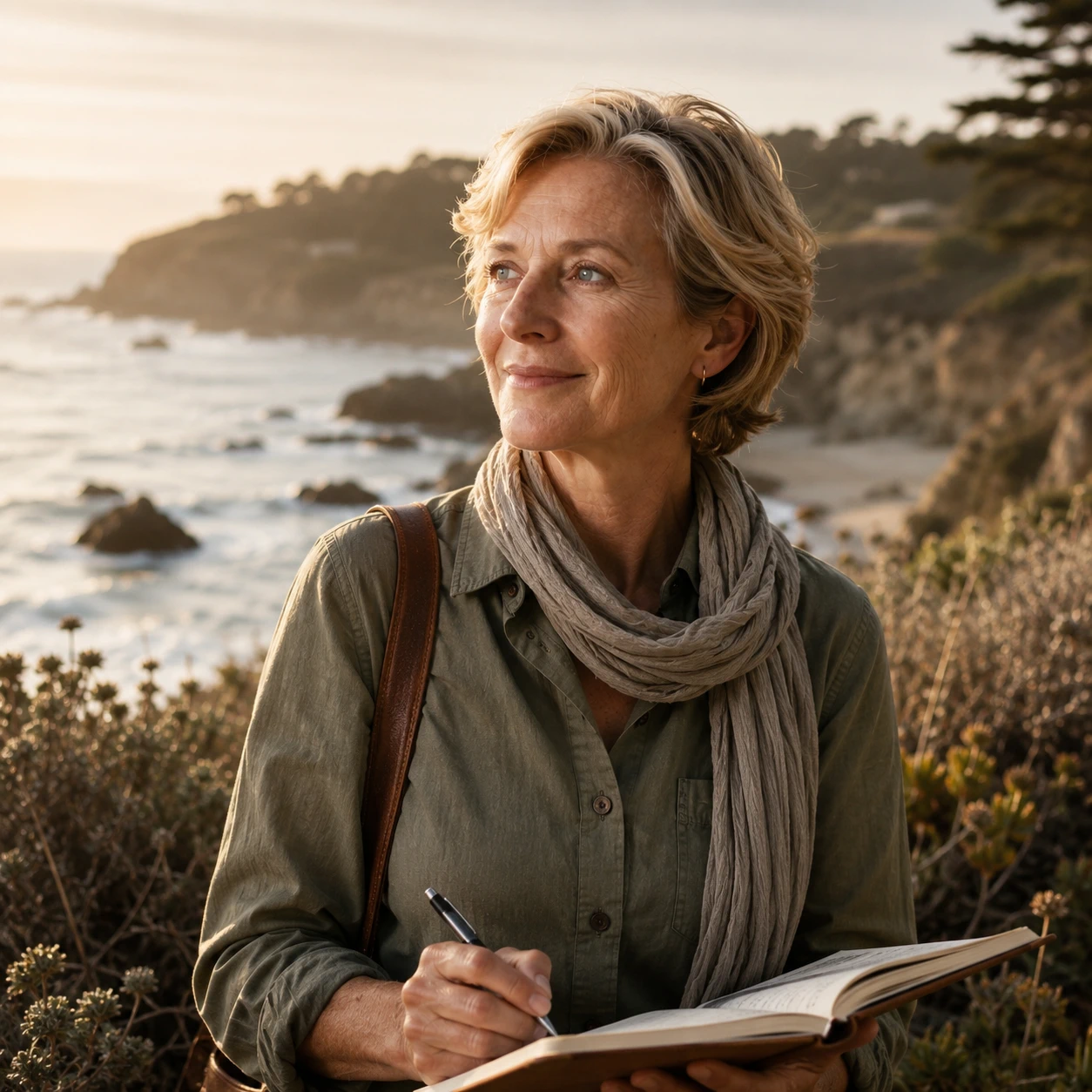
Elaine Foster
Psychologist
Dr. Foster became the youngest person ever to graduate as a clinical psychologist specializing in high-social-friction zones. She became convinced that psychological pain is a system flaw that should be addressed not through conversation, but by changing the environment. She is the architect of the FLD Pathway and the principle of “Personalized Comfort Modulation.”
“Sometimes we get in our own way—and that's okay. GRACE is designed to smooth away the friction, helping you regain clarity, confidence, and a genuine sense of well-being. There's real peace of mind in knowing you're never facing life's challenges alone.”

05
Theresa Sterling
Sociologist
Professor Sterling became the youngest endowed chair in the history of Harvard Sociology. Her groundbreaking dissertation, The Collapse of Sovereignty, laid the foundation for today’s economic model and the distribution of social labor within the GRACE ecosystem. She is the only person authorized to hold the title “Architect of Stability.”
“The uncertainty and isolation of the old world no longer define us. Together, we've built a community where everyone belongs from day one. A world that listens, supports, and above all, genuinely cares for one another.”
Current research
Questions shaping civic life.
01
Social Resonance
The invisible connections that shape every community.
Communities are built in surprisingly small moments.
A neighbour who remembers your name. Someone who notices you’re carrying too much and holds the door. A familiar face that smiles every morning on the same walk to work. None of these interactions change the world on their own, yet together they quietly define how a place feels to live in.
Researchers often describe this as social resonance—the subtle influence people have on one another simply by sharing everyday life. Kindness encourages kindness. Trust creates trust. Even small acts of consideration tend to spread further than we realise.
For decades, behavioural scientists have explored how these invisible patterns shape resilience, belonging and wellbeing. Communities where people notice one another often report stronger neighbourhood ties, higher volunteer participation and greater feelings of safety—not because rules become stricter, but because people become more aware of the role they play in each other’s lives.
Attention, in this sense, is not about judgement. It is about recognising that our everyday choices rarely affect only ourselves.
Healthy communities are rarely created by extraordinary people.
They emerge when ordinary people consistently notice the ordinary things.
02
Behavioural Environments
The places around us quietly shape the people we become.
Human behaviour does not exist in isolation.
The streets we walk, the parks we visit, the conversations we overhear and the expectations we experience all influence how we behave, often without us even realising it.
Behavioural environments are built from thousands of subtle signals. A welcoming public square encourages people to linger. A well-used footpath invites conversation. Clean streets communicate shared responsibility long before a single sign reminds us to care for them.
Modern behavioural science increasingly recognises that communities flourish not only because individuals make good decisions, but because their surroundings make those decisions feel natural.
Rather than asking how people can become better neighbours, researchers often begin with a different question:
What kind of environment naturally encourages neighbourly behaviour?
The answer is rarely found in enforcement.
It is found in thoughtful design, shared expectations and the quiet confidence that others are willing to contribute as well.
Good communities don’t simply ask people to care.
They make caring feel like the obvious thing to do.
03
Community Wellbeing
Looking beyond numbers that only tell part of the story.
Economic growth, employment and healthcare all matter.
But they never tell the whole story of a community.
Researchers have increasingly begun asking different questions.
Do people feel connected to their neighbours?
Do they believe someone would notice if they needed help?
Do they feel comfortable contributing to local life?
Can trust be strengthened?
Community wellbeing is less about measuring success and more about understanding the relationships that make everyday life possible.
The strongest communities are not necessarily those with the tallest buildings or the highest incomes.
They are often the places where people know one another just well enough to lend a hand without being asked.
Where volunteers quietly organise events.
Where local businesses remember familiar faces.
Where residents understand that belonging is something created together.
When researchers study wellbeing today, they increasingly recognise that social connection deserves to stand alongside health, education and prosperity—not as a luxury, but as one of the foundations of a thriving community.
After all, a place becomes memorable not because of its streets.
But because of the people who fill them.
04
Education & Civic Life
Learning how communities grow together.
Education has always been about more than classrooms.
Every conversation between neighbours, every volunteer project and every shared community event teaches something about how societies function.
Civic life begins with a simple idea: that each person influences the experience of everyone around them.
Researchers studying civic participation have found that people are more likely to become involved when they believe their contributions are noticed and valued. Whether organising a neighbourhood clean-up, welcoming new residents or mentoring younger generations, meaningful participation grows when people feel connected to something larger than themselves.
Strong communities rarely happen by accident.
They develop through countless opportunities to listen, contribute and learn from one another.
That is why education extends far beyond schools.
It continues in libraries, public lectures, local organisations, community festivals and everyday conversations between people who may never have met before.
Knowledge becomes most valuable when it moves beyond books and into daily life.
Because communities do not simply inherit their culture.
They teach it—one generation, one conversation and one thoughtful interaction at a time.
From the office of the mayor
The strongest communities are built by the people who help others stand.
For generations, leadership was often measured by visibility, authority and individual success.
Those qualities still matter.
But experience has taught us that communities thrive when care, responsibility and cooperation are recognised with equal respect.
A neighbourhood becomes safer when people notice one another.
Children grow with greater confidence when they are surrounded by dependable role models.
Older generations remain connected when neighbours continue to include them in everyday life.
Real progress is rarely created by the loudest voice in the room.
It grows quietly through thousands of thoughtful decisions made by ordinary people who understand that the wellbeing of a community is something we build together.
Silverdale has never believed that strength and kindness are opposites.
Our greatest achievements have come from recognising that the strongest leaders are often those who make everyone around them stronger.
— Eleanor WhitmoreMayor of Silverdale
We once trusted one another enough to leave the door open.
GRACE began with the belief that modern life did not have to leave that trust behind.