Pulse R07E59 · September 16, 2026 · 2 min
Meet the Little Green Bee of September
Small, metallic green, and probably already living somewhere near your garden.
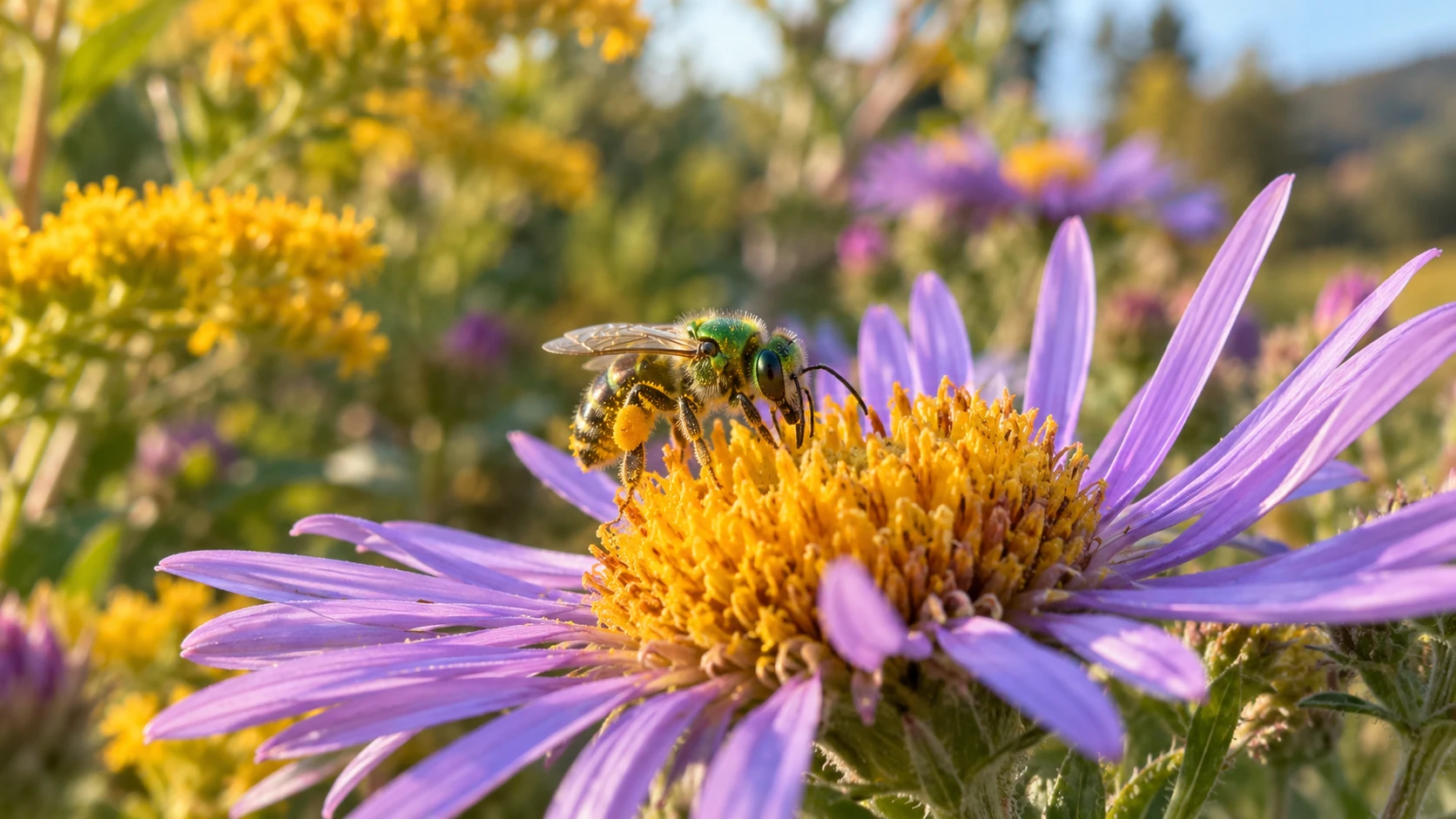
September is usually a quieter month in Silverdale’s apiaries. The colonies are still active during warm afternoons, but their priorities are changing. Beekeepers are checking food stores, watching colony strength and trying not to interfere more than necessary as the bees prepare for the cooler months ahead.
Rather than repeat last month’s advice about mites, water and late-season forage, we thought we would introduce one of the smaller visitors you may encounter in a Silverdale garden: the ultra-green sweat bee.
Despite the rather unfortunate name, these are remarkable little insects. Female ultra-green sweat bees are metallic green across most of their bodies. Males have green heads and thoraxes with striped abdomens. In sunlight they can look less like bees and more like tiny pieces of moving jewelry.
Unlike honeybees, they do not live together in large hives or produce honey. They nest in the ground, usually in small tunnels, and are commonly found visiting flowers in the daisy family. Goldenrod, asters, sunflowers and other open-centered flowers are good places to look during warm, calm parts of the day.
The “sweat bee” name comes from the tendency of some related species to land on people and collect moisture and salt from perspiration. This is usually more surprising than dangerous. They are not looking for a fight; they are looking for a very small sports drink.
One useful thing gardeners can do for these and many other native bees is leave a few small patches of soil uncovered. Thick mulch may look tidy, but many of California’s native bees nest underground and cannot use soil hidden beneath several inches of wood chips. A slightly imperfect corner of the garden can be valuable habitat.
California has roughly 1,600 native bee species, most of which do not live in managed hives. Honeybees may receive most of the attention, but they are only one part of a much larger—and often much more colorful—pollinator community.
If you spot a metallic green visitor among your September flowers, take a photograph if you can. We would be delighted to help identify it.
Newcomers are always welcome—no hive required.
Contact: bees@silverdaleclub.org
Continue reading
You might also like
Summer Colony Update
Warm weather has Silverdale's colonies thriving, while a long dry spell makes garden water sources and late-season hive checks especially important.
The Summer Buzz Is Changing
Warm afternoons are keeping Silverdale’s bees busy, but the season is beginning to shift. This month, local beekeepers are watching late-summer forage, checking colony strength, and keeping a particularly close eye on varroa mites.

Drawn in Motion at Jenna & the Paper Stars
A new exhibition at Jenna & the Paper Stars brings together painted movement, handmade worlds and heroes who do not need capes to appear fearless.
Silverdalers, in their own words
From Silverdale
Owen Mercer
I love to read about these little rascals. I always enjoy looking at the bees flying from flower to flower.
❤️1
Community notes
Join the conversation
Thoughtful contributions help keep Silverdale’s community conversations useful, welcoming and connected.
GRACE COMMUNITY
Thank you.
Your Community Profile could not be verified.
Comments become available after participation has been confirmed.