A different starting point
Waste is not the end of a material.
The aim is not the largest possible recycling claim. It is to lose as little useful material as possible. When something used for twenty minutes ends in landfill or combustion, GRACE looks beyond the bin to the product, package, collection route and recovery process.
If people consistently make the same mistake, GRACE first asks whether the system is badly designed.
One misplaced cup does not change a Harmony score. Repeated outcomes become aggregate evidence: a reason to inspect the system rather than lecture the resident.
At home
Two household streams.
Simple enough to remember. Distinct enough to protect the value of organics.
Organics
Kept separate because clean organic material is far more useful for anaerobic digestion or high-quality composting.
- Food scraps
- Accepted compostable material
- Garden and green waste
Mixed Recovery
Residents do not need to identify seven kinds of plastic. The recovery facility performs the specialist separation consistently and at scale.
- Paper and card
- Plastics
- Metal and glass
- Composite packaging and residual material
Collected when it makes sense
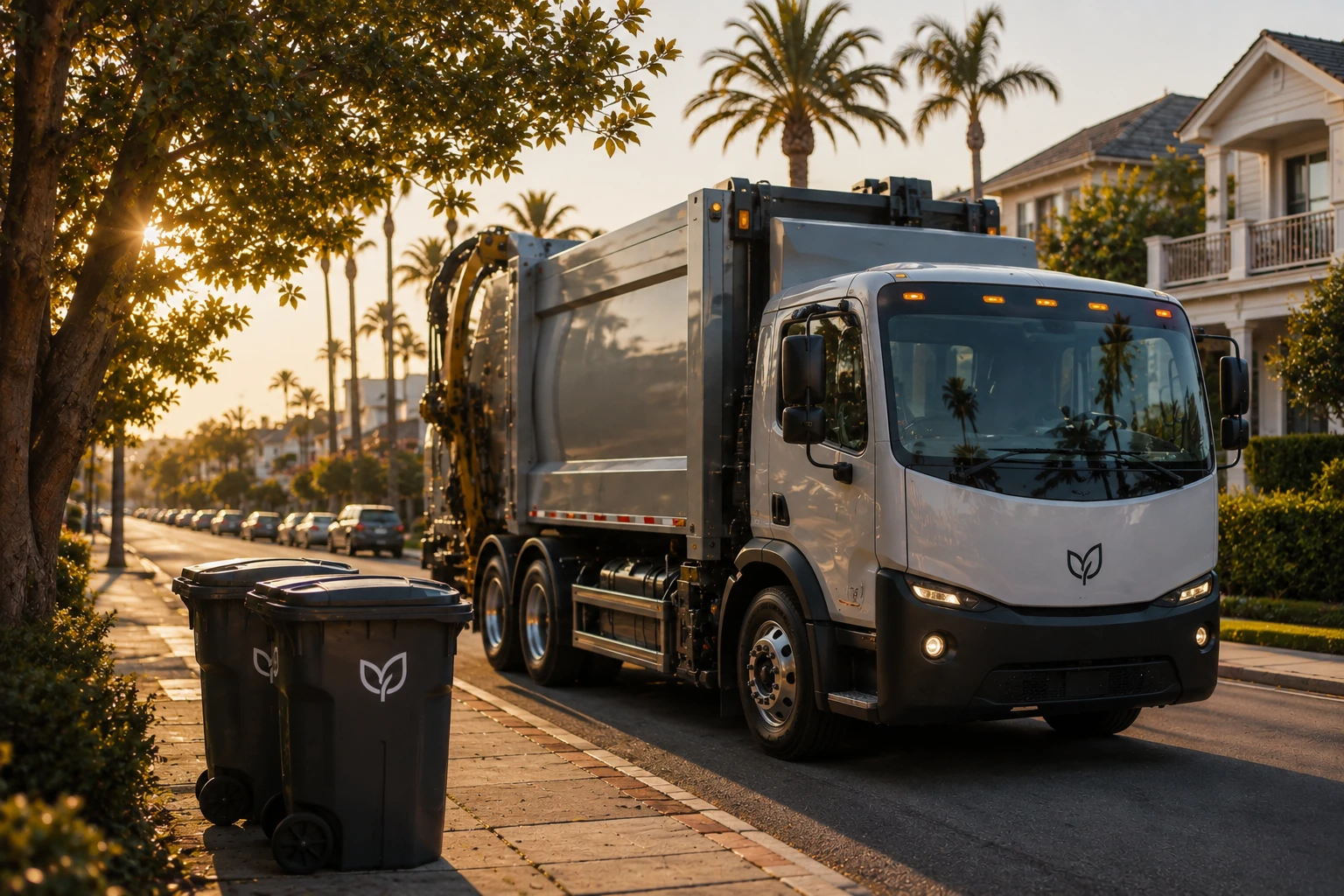
The route follows the need.
Fill sensors and historical patterns help plan routes for electric collection vehicles. The goal is not to empty every container on Tuesday. It is to collect each one when capacity, distance and likely demand align.
Current fill level
Historic use
Traffic conditions
Route distance
Vehicle capacity
Expected production
Older neighbourhoods may keep household containers. Denser districts may use shared or partly underground collection points. A functioning street is not rebuilt for a marginal theoretical gain.
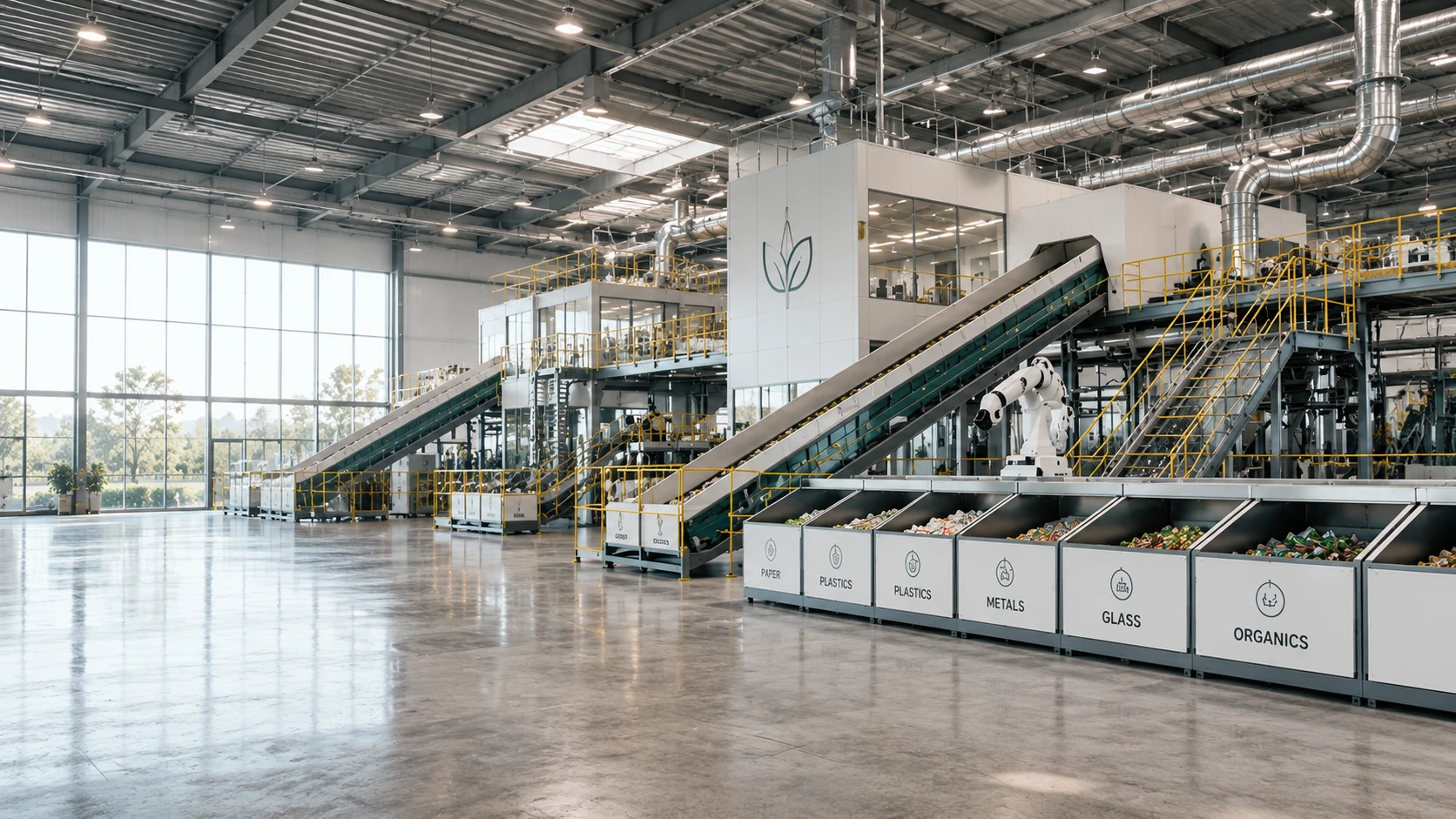
Inside the recovery facility
Existing technology. One connected view.
The machinery is recognisable from modern recovery facilities. Silverdale’s advantage is that collection, sorting, quality control and product feedback share one measured chain.
Open & separate
Bag openers, screens, airflow and mechanical separation prepare a consistent material stream.
Recognise
Cameras, computer vision and near-infrared optical systems identify objects and distinguish common material types.
Recover metals
Magnets lift ferrous metals; eddy-current separators remove non-ferrous metals such as aluminium.
Verify & learn
Quality checks measure contamination, successful recovery and the objects that repeatedly reach residue.
Clean organics are processed through anaerobic digestion, high-quality composting or both, depending on feedstock and current facility capacity. Nothing here requires a molecular recycler or a household robot.
When the pattern points upstream
Show the maker what happens next.
Silverdale Material Recovery can tell a supplier more than whether packaging is recyclable in theory. It can show what happens after thousands of real purchases and disposal events.
- —Frequency in the material stream
- —Probable material composition
- —Where sorting succeeds or fails
- —Recovery and loss rates
- —Performance of comparable packaging
“This is what happens to your product after it is sold.”
The first response is collaboration: share the data, locate the failure and test alternatives. If a practical improvement exists and a manufacturer refuses it for years, Silverdale may return more of the real recovery cost to that product—not as a moral penalty, but because the current packaging transfers part of its disposal cost from the manufacturer to Silverdale.
Fictional Silverdale case study
A better coffee cup.
Sometimes improving a city starts with something very small.

Nobody complained about the cups. They held hot coffee well, looked like paper and carried a recyclable label. Customers and cafés reasonably believed they were doing the right thing.
Observed recovery
26.8%
Comparable packaging
Above 90%
The cup combined paper with a bonded polymer lining. Technically recyclable, it was difficult to separate consistently in Silverdale’s actual facility. Most cups reached residue. The customer was not the problem. Neither was the café.
No individual café could see it.
Customers couldn’t see it.
The manufacturer mainly knew the cup passed a technical test.
GRACE could see what actually happened.
Test, fail, learn
Not every alternative worked.
Silverdale brought the manufacturer, material supplier and participating cafés together. Some coatings leaked. One option felt cheap. Another cost too much. A fourth could not handle the serving temperature.
The successful version used a simpler material combination, a revised bonding method and a lid that separated more reliably in existing equipment. The coffee tasted the same. The cup felt the same. Cafés kept their workflow.
Measured after introduction
94.1%
recovered in Silverdale Material Recovery
Same coffee. Same cafés. Same people.
A better outcome.
Not because thousands of residents were told to behave differently. Because one small part of the system was redesigned around what actually happened.
Silverdale system snapshot
Measured, then measured again.
Current planning year
- Material recovery
- 81.6%
- Organics recovery
- 92.4%
- Landfill dependency
- 7.9%
- Avoidable material loss
- 10.5%
usable material returned to a next use
clean organics reaching treatment
of collected household material
current focus for redesign
Continue exploring